
Akihabara · Japan
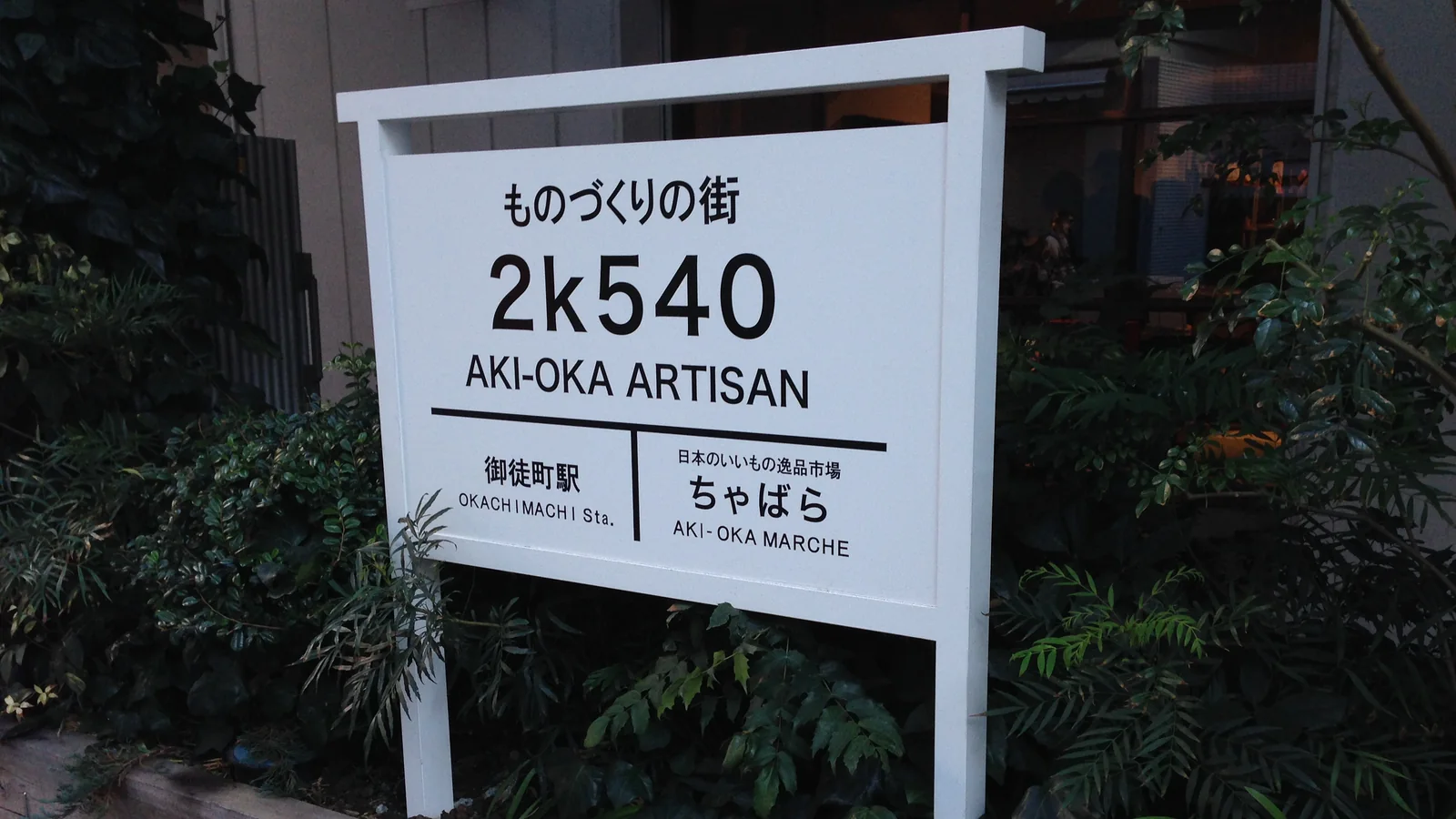
2k540 Crafts Beneath the Railway in Akihabara
Explore 2k540 through its makers, materials and workshops, with Japanese perspectives, current shop examples and practical access from Akihabara.
2k540 AKI-OKA ARTISAN is a cluster of craft shops, studios and cafés beneath the elevated railway between Akihabara and Okachimachi. Its interest lies in the relationship between a finished object and the people, materials and processes behind it. You can browse jewellery or leather goods, encounter a workshop beside a shop, or find a regional maker represented in Tokyo.
For visitors who enjoy the detail of how things are made, this offers another way into the Akihabara area. A small question—why this material, how this joint works, whether something can be maintained—can be more rewarding than trying to see every shop.
Quick answers
What does 2k540 mean? It is railway terminology: the site is around 2 kilometres and 540 metres from Tokyo Station, measured along the railway. AKI-OKA combines Akihabara and Okachimachi; artisan means craftsperson. The operator pronounces the number ni-kē-go-yon-maru. Official concept and name
Where is it? 5-9 Ueno, Taito City, Tokyo, under the railway. The operator gives walks of six minutes from JR Akihabara’s Electric Town exit, four from JR Okachimachi’s South exit, or three from Suehirocho subway station. Use the official access map for your approach.
When is it open? General shop hours are 11:00–19:00, normally closed Wednesdays, with public-holiday exceptions. The shared passage opens 10:00–20:30, which does not mean the shops are open throughout. Individual tenants and food businesses can differ. Official hours
Do I need a ticket or workshop booking? General admission is free; purchases and activities are separate. For a particular workshop, check its date, booking conditions, language and price with that business. GO TOKYO notes that most classes are taught in Japanese. Official Tokyo visitor information
Three ways to understand the shops
The operator calls 2k540 a monozukuri place: a place concerned with making things. That includes several different relationships to production. Looking for the differences makes a visit more interesting than assuming every item is made beneath these tracks.
A workshop beside a shop. Jewellery maker A:buchiadot describes a small combined atelier and store where it designs and makes its pieces. Its motifs include familiar objects with an unexpected twist. The shop also advertises commissions and after-purchase maintenance and cleaning. Here, the questions might concern how a shape becomes wearable, or how a piece can be cared for over time.
Regional manufacture represented in Tokyo. The current directory lists SPINGLE, whose handmade sneakers come from its factory in Fuchu, Hiroshima. The brand’s own 2k540 shop page confirms the Tokyo address. A shop can connect you with a manufacturing region without being the factory itself. Look at construction, fit and materials; do not expect shoe production to be happening in the aisle.
Materials and learning. The current shop directory includes Turner Color Spice, offering paint materials and advice across interiors, art and hobbies, and Yosemo STUDIO, offering workshops and classes in its jewellery craft. One starts with materials you might use; the other offers a way to learn a process. Browse current offerings before planning around a particular session.
These examples are starting points, rather than a ranking of shops. They also suggest different questions: “Was this made here?”, “Where is it produced?”, and “Can I try the process?”
What the Japanese makers describe
In an operator-published account of a May 2021 discussion, Takuya Ishijima, then nocra’s manager, described collaboration beginning with a practical need: expertise in another material was close enough to ask about. Working together followed from those conversations, rather than being the starting objective.
Asako Touda of A:buchiadot valued a setting that accepted the noise and everyday appearance of workshop life. Katayama, her colleague, recalled a clock-making workshop combining wooden or leather bases with brass faces from different businesses. Their examples make the shared setting tangible: a material problem can become a reason to speak to a neighbour.
These are historical participants’ accounts, published by the operator in January 2023, rather than a description of every shop today. In particular, nocra’s appearance in that discussion is not a current visit recommendation.
The same community also needed work. In a 2021 staff interview, republished in 2024, facility representative Kotaro Abe described communication mismatches as management staff changed while tenants remained. He recalled difficult conversations about dissatisfaction during the pandemic. His colleague Miki Fukuda described creating opportunities for makers to speak about their work partly to address a sense that the place might be hard to approach.
That history adds depth to the polished shopfronts. Putting makers close together can enable exchanges, but sustaining those relationships takes attention. It is the staff’s account of that period, not evidence of present-day conflict.
A visitor finds something unexpected
Designer Aya Tsuchiya, writing about helping at Font Sanpo on April 11, 2026, describes buying a 3D-printed object shaped like the hiragana character き, pronounced ki. Its rocking movement caught her attention even though the character was absent from both her name and her pet’s name. Her April 26 account
Her pleasure came from an object behaving differently from what she expected. It is one event helper’s experience, and that temporary exhibitor should not be assumed to be a permanent shop. For a visitor, though, it suggests a useful habit: give an unfamiliar material or mechanism a moment before moving on.
Plan a visit around one question
Choose one material or process that interests you—metal, leather, paint or something you encounter along the way—and leave room to look beyond it. Use the current directory to identify a starting shop, then check its own notices if you need a specific service.
Before handling an object or photographing someone’s work, ask. If you are considering a commission, clarify the price, completion date and delivery arrangements before ordering; it may need more time than your stay allows. A workshop beside a shop is also a workplace, so demonstrations and lengthy conversations depend on what staff can offer that day.
For another view of Japanese creative culture, our doujin music guide follows how independent musicians make and share recordings. Both subjects reward attention to decisions behind the finished thing, whether those decisions concern a material, a sound or how someone encounters the work.
Sources and checked date
Shop listings, access and general hours were checked October 22, 2026 against the operator and linked businesses. Check their current notices before travelling. The practical information and historical Japanese accounts are linked beside the relevant passages above; this is researched coverage, not our own visit or interview.
Japanese accounts were interpreted with AI assistance and checked separately against the original passages. That check is not independent bilingual review. The historical photograph is credited above; its web, thumbnail and social variants retain CC BY-SA 2.0. It does not document current signage or tenants.