
Akihabara · Japan
BEYOND THE STRAND 2026: Kojima’s Creative Process in Tokyo
A guide to Kojima Productions’ Tokyo exhibition: preview versus standard tickets, Death Stranding production materials and Japanese creators’ design decisions.
BEYOND THE STRAND is a Kojima Productions exhibition at Tokyo’s Azabudai Hills Gallery, running October 31–December 20, 2026. The opening four days require preview tickets; standard admission begins November 4. Its announced production materials offer a way to look beyond familiar characters and ask how a game’s ideas become drawings, prototypes and performances.
The studio behind Death Stranding is the subject here. The exhibition surveys its first decade through development records and installations, including material connected with Death Stranding 2: On the Beach and the forthcoming OD – KNOCK. Its development records are the reason to look closely: they can reveal decisions that disappear into a finished game. Studio’s exhibition introduction
Quick answers
Where is it? Azabudai Hills Gallery, Garden Plaza A, MBF, 5-8-1 Toranomon, Minato-ku, Tokyo. Kamiyacho Station’s Exit 5 connects directly to the complex; Roppongi-itchome Exit 4 is about seven minutes’ walk away. Follow the gallery signs within Azabudai Hills. Official access information
Which ticket do I need? Choose by visit date, before comparing merchandise. The announced prices include tax:
| Visit date | Ticket | Advertised price |
|---|---|---|
| October 31–November 3 | Preview, with tote bag | ¥5,000 |
| October 31–November 3 | Preview, with original goods set | ¥18,000 |
| November 4–December 20 | Standard advance, for a specified date | ¥2,600 |
| From November 4 | Same-day admission | ¥2,800 |
Preview tickets specify a date and time. A standard advance ticket does not admit you during the opening four days. If the exhibition itself is your priority and your dates are flexible, November 4 onward offers the lower advertised admission price. Current exhibition ticket options, Lawson’s ticket conditions
What are the hours? The preview days, October 31–November 3, open 10:00–20:00, including Monday, November 2. After that, weekdays are 12:00–20:00, weekends and public holidays 10:00–20:00. Last entry is 19:30. On December 16, closing is 17:00, with last entry 16:30. All times are Japan Standard Time. Lawson’s current schedule
Can I play the early Death Stranding prototype? The detailed announcement specifies prototype footage. It also advertises a recreated red door from OD – KNOCK and filming props; these announcements do not establish a playable OD demo. October 16 programme release
Start with a book report, then look for the decisions
Among the announced objects is a high-school reading response by Hideo Kojima to Kobo Abe’s short story “Nawa”, or “The Rope.” The programme pairs these creative origins with early Death Stranding prototype footage and original production materials. Programme announcement
That literary connection has a longer public history. In Katsuhiko Hayashi’s June 2016 Famitsu interview, Kojima explained that he had read the story in high school. He used its contrast between a stick that keeps things away and a rope that draws things together to discuss the game’s theme of connection. He also qualified the idea: this did not mean simply making a multiplayer game in which everyone uses literal ropes. Famitsu interview
That is a useful distinction when looking at development material. A theme does not arrive fully formed as a control scheme or character design. Try following one idea across different forms: a written note, a drawing and an early moving image. What becomes concrete? What changes? Following those changes can make the production materials easier to interpret.
The studio says the show will include development-team interviews and material about the experiments behind the finished works. A marked-up document can therefore deserve as much attention as a polished object: it may make a choice visible that the released game conceals. Studio’s account of the exhibition’s scope
Two Japanese creator accounts put the process in focus
Shinkawa: an anniversary design needs a reason for its shape
The announced life-size tenth-anniversary Ludens represents the studio’s armoured mascot. In a February 6, 2026 interview published by Kojima Productions, art director Yoji Shinkawa described the thinking behind that version. An initially more substantial update gave way to an antenna designed to resemble X when seen from the front: the Roman numeral for ten. He also discussed considering other visual directions before settling on the mechanical design. Shinkawa’s Japanese interview
The interview offers a specific way to look at the announced statue: consider how the anniversary is expressed through its silhouette, rather than just recognizing the mascot. A recognizable silhouette is also the result of choices about what to emphasize and what to leave out.
Kojima: a production tool can reveal the difficulty behind the spectacle
Another announced exhibit is Mado, a telepresence system used during pandemic-era production. The exhibition plans to connect a display at the gallery with the studio’s office. The programme also includes early ending ideas and location-scouting material for Death Stranding 2. October 16 announcement
In Tetsuya Inamoto’s May 8, 2025 GAME Watch Q&A report, Kojima described directing performance capture in Los Angeles remotely from Tokyo around 2021. Giving physical instructions through an assortment of cameras had been difficult. He said large, two-way displays helped him see the other space and respond to work as it happened. His account of nearing completion emphasized relief at getting the game out safely. GAME Watch’s Japanese report
This makes Mado interesting as production equipment, alongside the more spectacular displays. The finished performance depends on people being able to communicate across distance. A live office connection should not, however, be treated as a promised meeting with Kojima or any particular staff member.
The two accounts describe different parts of making a game: shaping an image and enabling the people who produce it to work together.
Plan for the show you want to see
If you want to examine making-of material, give the documents and footage some attention before moving on to the large installations. If you are avoiding story details, the announced early ending concepts for Death Stranding 2 are worth bearing in mind when deciding what to inspect. We have not verified the extent of English labels or interpretation throughout the exhibition.
For a separate art stop, the official site lists a free Yoji Shinkawa solo exhibition at books ogaki, October 31–November 3. That is a different presentation within Azabudai Hills; its free admission does not apply to the main gallery exhibition. The main exhibition’s shop also requires an exhibition ticket. Official collaboration and shop information
Lawson’s rules specify no re-entry and ask visitors to put large bags in lockers. Photography is permitted for personal use, with no flash, tripods or selfie sticks; filming the video works is prohibited. Follow the current on-site instructions. Visitor rules
If you would rather try work in progress directly, our Tokyo Game Dungeon guide covers a different October 31 event built around small developers’ playable demonstrations.
Sources and checked date
The programme, dates, ticket distinctions and visitor rules were checked October 26, 2026 against the exhibition, studio and linked Lawson listing. Lawson displayed preview and standard tickets as on sale; we did not establish remaining inventory for particular dates or time slots. Use the Buy Tickets links on the official exhibition site to check the current seller options before making plans. Programme and opening hours may change.
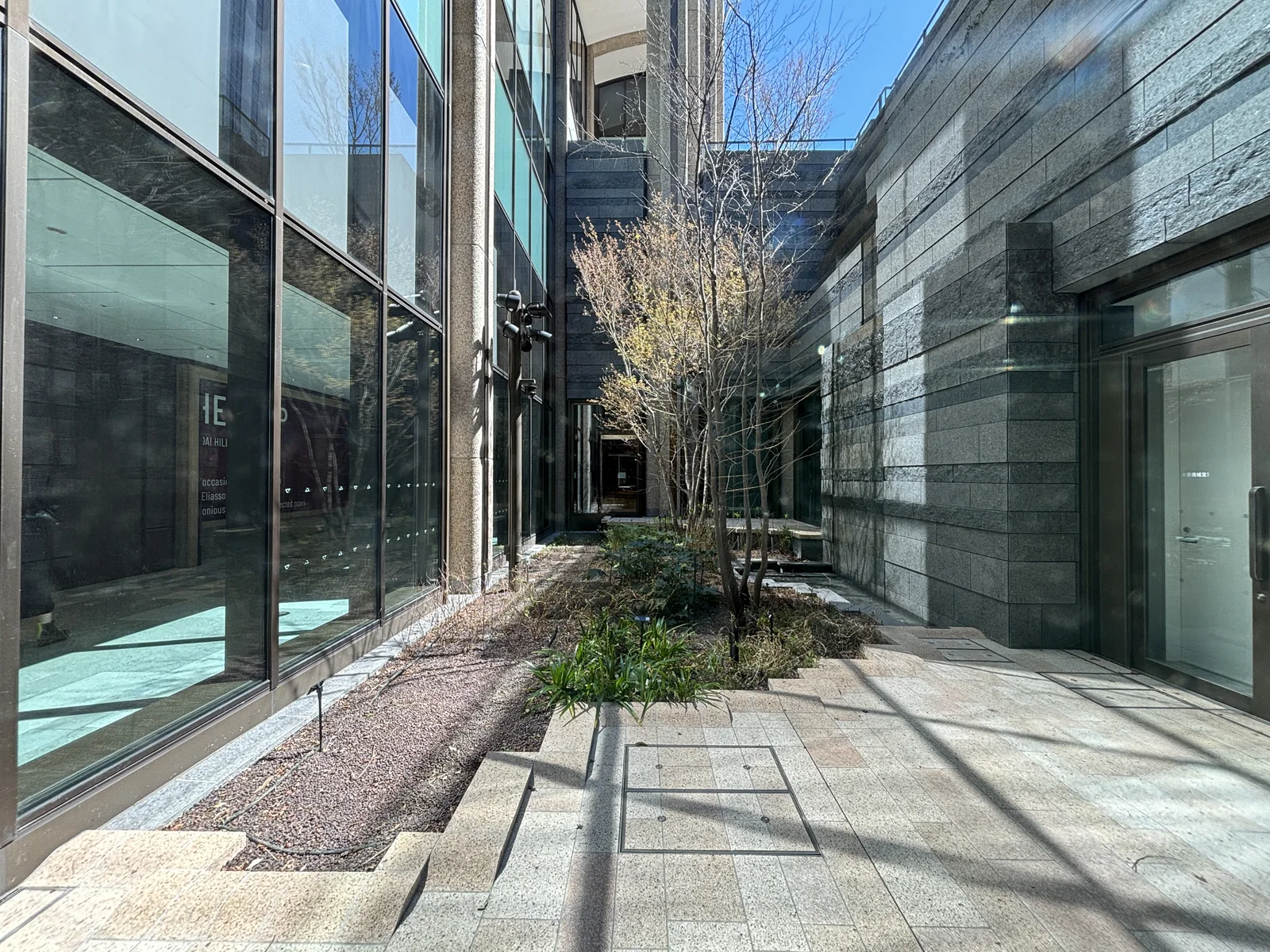
This is a researched preview, not an attendance report or review of the installed show. The Japanese creator accounts are credited and linked above. AI-assisted translations were checked separately against their originals; that is not an independent bilingual review. The article uses original interpretation and short paraphrases. The credited photograph documents the gallery courtyard in 2024, not this exhibition.