
Akihabara · Japan
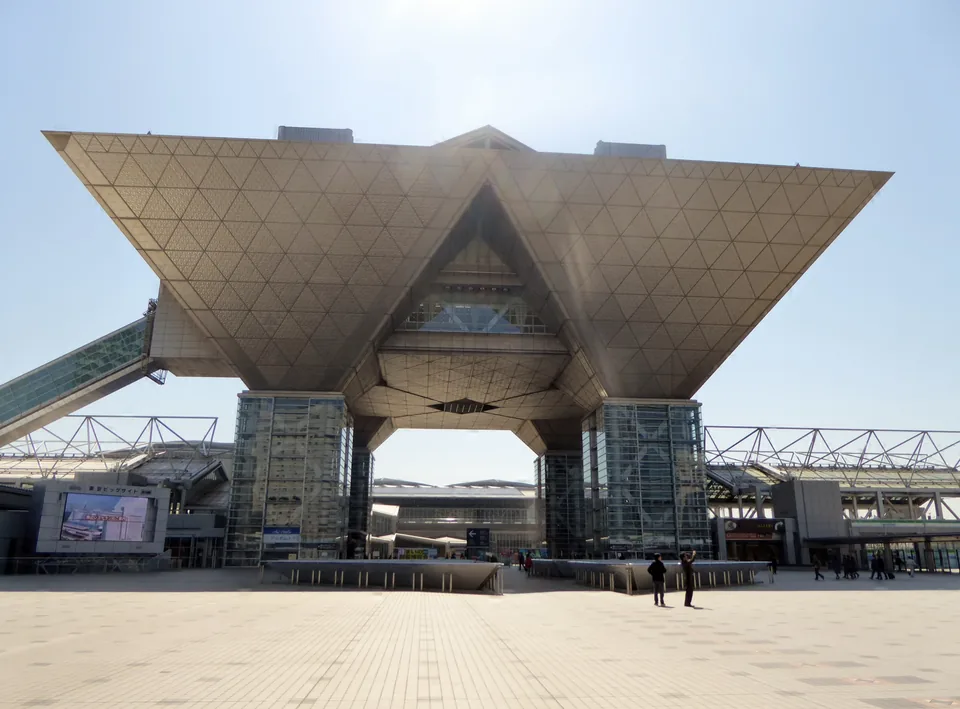
Design Festa 64: Meeting the Makers Behind Original Art
Explore how Japanese makers present original art at Design Festa 64, the November 14–15, 2026 edition at Tokyo Big Sight.
Design Festa vol.64’s November 14–15, 2026 dates have passed. The organizer scheduled the event for 10:00–18:00 JST each day at Tokyo Big Sight’s West and South Halls. It is an event for original work across disciplines, from illustration and accessories to live painting and performance. For a visitor interested in Japanese creative culture, one rewarding approach is to look beyond the object for sale and ask what its maker is trying to express. Official overview
Often shortened to デザフェス (Dezafesu), Design Festa brings professional and amateur creators into the same event. Originality of the work is central to the organizer’s stated scope. Come with room to discover an unfamiliar artist or design idea, alongside any booths you already want to visit.
The November 2026 edition
Where was it scheduled? The organizer listed all of Tokyo Big Sight’s West and South Halls.
What were the ticket terms? Advance sales ended November 13. The organizer listed a ¥1,000 same-day one-day ticket, including tax. Both sales periods have ended. Official ticket information
What was the children’s policy? The organizer listed free entry for elementary-school children and younger.
Can I visit without speaking Japanese? We have not verified event-wide English support. Images and objects can provide a starting point, but check a maker’s language and payment arrangements individually. A prepared question or translation app may help; neither guarantees that a longer conversation is possible.
One exhibitor’s plans for contemporary crests
Illustrator So Terada (寺田創) announced both days at E-84, under 家紋とか・寺田創, in an announcement dated October 28. His series uses contemporary motifs to make original kamon, or crest-like designs. For the new work, he describes placing more emphasis on the design than on the motif itself. The page remains a preparation update, so treat its contents as plans. Terada’s announcement
This offers a useful way to look: first notice the shape, then try to identify what has been transformed. What has been simplified, repeated or made symmetrical? You can enjoy that visual puzzle without treating an invented contemporary crest as proof of a family’s historical lineage.
The photograph in his announcement shows the previous edition, vol.63.
What a booth means to its maker
Two earlier exhibitor accounts give different perspectives on the encounter across a table. These are individual experiences from 2026 and 2025, not a survey or confirmation that either writer will exhibit at vol.64.
Letting the work stand on its own
Illustrator はる谷。 (Harutani) writes on May 27, 2026, about vol.63, held on May 23–24. It was a first solo booth after several earlier appearances with others. The account describes wanting the illustrations to be loved whether or not their creator was present. Seeing people stop for the displayed works, and finding that purchases happened during an absence, felt meaningful in that light. Returning visitors and renewed encounters also mattered. Harutani’s reflection
For a visitor, that suggests allowing the work a little time before asking for a story about it. Look at a composition, compare two objects, or notice which detail makes you stop. A conversation can begin with that observation, rather than requiring an artist to explain an entire practice immediately.
Welcoming someone without pressing them
In a July 27, 2025 report on vol.61, accessory and craft maker atsuco describes trying to find a comfortable distance: greeting someone who stopped, explaining uses or colours when helpful, and avoiding an aggressive sales approach they disliked as a buyer. The account also notes a practical omission—visitors asked for shop cards, but none had been prepared. atsuco’s report
That is a maker’s chosen approach, not a service every booth promises. It is also a reminder that an interesting encounter can continue later. If you want to follow someone’s work, ask where they publish updates instead of assuming that a shop or particular social account exists.
Build a visit around attention, not a complete checklist
Choose a few destinations from makers’ own announcements and save their booth codes and announced days. For a future edition, use that edition’s exhibitor listings and hall maps to plan your route. Leave time between your planned stops.
At each stop, try one small question:
- Looking: what drew you over—the material, a shape, a colour combination or a character?
- Making: if conversation is welcome, what would you like to understand about a specific design choice?
- Following: where can you find the creator’s work afterwards, and what information may you save or photograph?
These are our suggestions for browsing, not a timetable or an expectation that every artist is available to talk. Ask before handling an object or interrupting a demonstration. A brief, specific exchange can be enough; you do not need to turn each stop into an interview.
The original-work focus also makes this a different starting point from following a favourite existing franchise. If you enjoy the creation and discovery side of fan culture, our doujin music guide explores how independently released music can connect listeners with makers through a different medium.
Tickets, re-entry and photographs
Ticket check, November 16. Eplus shows the paper and electronic same-day applications closed after the November 15 cutoff. Eplus listing
The edition’s terms allowed re-entry after speaking to the staff before leaving. Ticket conditions
For a photograph of a particular work or person, the visitor rules require checking with the exhibitor. They also prohibit recording or streaming for live commerce. A ticket does not grant permission to publish someone’s artwork. Ask about the intended use and respect the answer.
Sources and checked date
Researched November 1, 2026, using Design Festa’s linked overview, ticket conditions, hall maps and visitor rules; the linked seller; and Terada’s current announcement. The edition’s dates and the end of ticket sales were checked on November 16, 2026.
Japanese perspectives are attributed above to Terada, Harutani and atsuco. We read and paraphrased their public writing with automated translation assistance, checking dates and qualifications against the originals. The browsing suggestions are our editorial interpretation. We have not attended this edition or interviewed these makers. The credited photograph is a 2015 venue view.