
Akihabara · Japan
Kaiju No. 8 DJ Event in Tokyo: Hearing the Soundtrack Differently
Explore Kaiju No. 8’s December 5 DJ event through its composer’s ideas, artist comments and practical ticket, ID and viewing questions for Tokyo visitors.
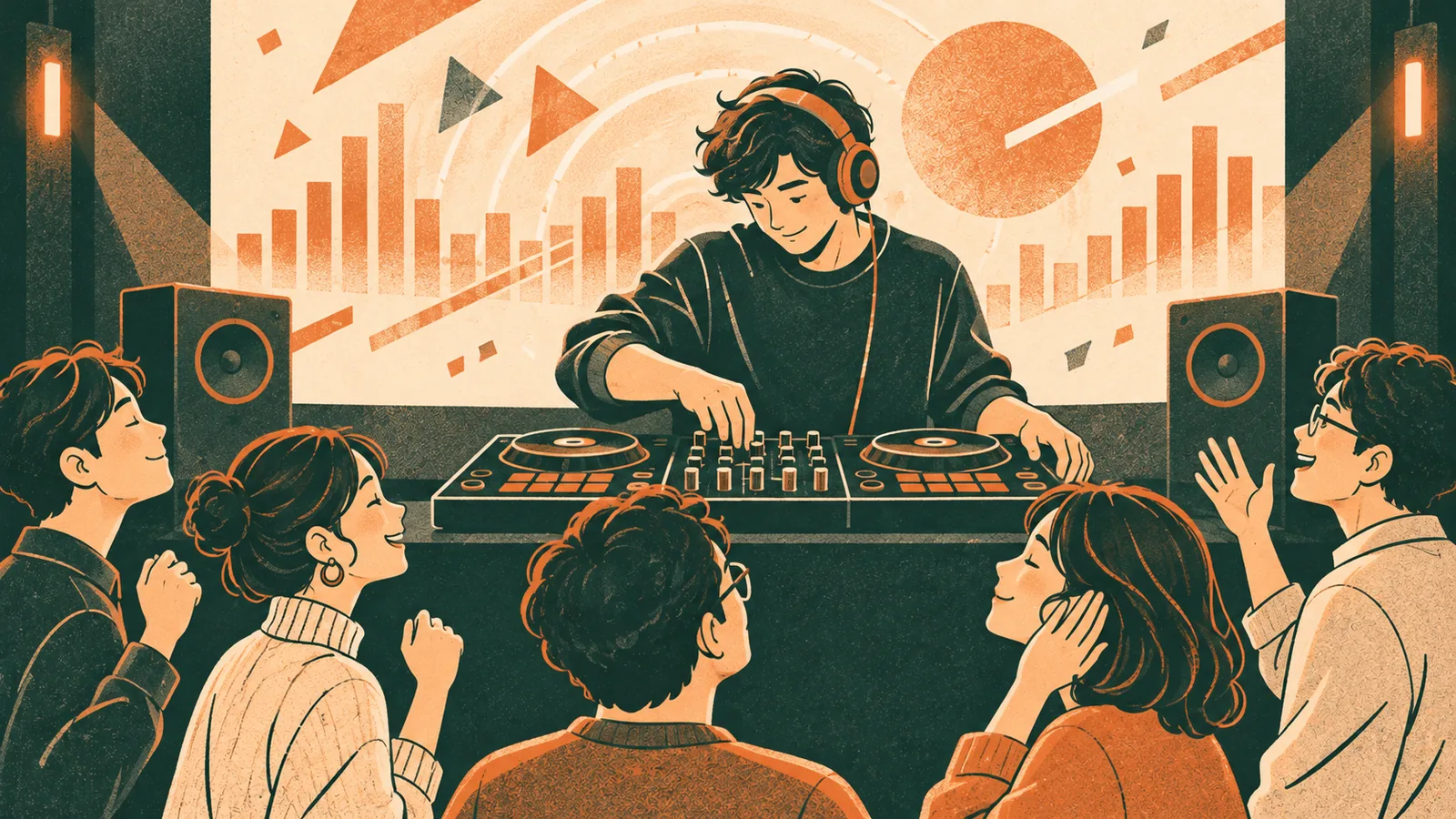
The Kaiju No. 8 DJ event on December 5, 2026 brings selections from the anime’s first- and second-season soundtracks to CLUB PLUM in Tokyo. Its appeal is a change in how you pay attention: music that accompanies a character or a fight can become the thing you came to hear. Official event
There is a useful connection to the score’s creation. Composer Yuta Bandoh has described making transitions between sounds like a DJ mix, then reworking material for listening without dialogue. A future DJ event offers another context for that music. It does not tell us in advance which tracks or transitions the performers will choose.
Quick answers
What kind of event is it? The announcement specifies a DJ event. Pia lists Masaya Fukunishi, Wataru Kato, Yuta Bandoh, RISA TANIGUCHI and MON/KU. A guest’s appearance does not establish a live-band set or a particular song performance. Official seller’s listing
When are the sessions? Both are on December 5, in Japan Standard Time:
| Session | Doors | Start |
|---|---|---|
| Day | 13:30 | 14:00 |
| Evening | 16:30 | 17:00 |
The advertised price is ¥7,500, including tax and one drink. Event details
Can I get a ticket now? At our November 8 JST check, Pia displayed the second advance lottery as accepting applications until November 8 at 23:59. That is an application window, not a guaranteed ticket or evidence of remaining general-sale stock. Pia
Will it work for an English-speaking visitor? The music offers something to follow without understanding every spoken word. However, we have not established English interpretation, subtitles, overseas checkout eligibility or the extent of spoken segments. Decide whether you would enjoy the announced musical format on those terms.
A soundtrack changes when the dialogue disappears
Music written for a screen has another job happening alongside it. Someone is speaking, moving or revealing information, and the score has to leave room for that action. A soundtrack album asks the music to hold attention in a different way.
In a July 9, 2024 interview with Lmaga.jp, Bandoh described thinking about how to switch from orchestral writing into other sounds without an awkward break, comparing the process to a DJ mix. The interview, conducted by Hidezumi Yoshimoto (吉本秀純), also explains why a soundtrack release need not be the same audio lifted out of an episode. Original interview
Bandoh said he had left space in the music for dialogue. With the speech removed, that space could feel missing, so he rearranged material and re-recorded some parts for the album. He also described adding things that music alone seemed to need. This is his account of the earlier production process, rather than a description of the December 2026 programme.
That distinction gives a listener something concrete to explore. Choose a passage you remember for its dramatic setting, then hear its official soundtrack version. What attracts your attention when the character is no longer speaking? Does the rhythm, an instrumental detail or the shape of the whole piece become more noticeable? You can make that comparison without treating one version as the definitive experience.
Three artists describe the coming encounter
The event’s Japanese comments describe hopes and intentions. They are promotional statements by participants, not reviews from an audience that has already attended.
Bandoh anticipates hearing the music loudly with a VJ, a performer working with live visuals. That suggests attention moving between sound and image, but does not establish particular footage, a running order or a measured sound level. Bandoh’s comment
RISA TANIGUCHI says she hopes to add colour to the work’s world through sound and rhythm. It is an interesting way to approach an adaptation: the DJ can respond to a fictional world through musical choices. The comment leaves those choices open. Risa’s comment
MON/KU looks forward to connecting with people who love the work through music. The soundtrack publisher supplies a specific connection: MON/KU co-created the Hoshina theme with Bandoh, and its later releases also credit a MON/KU remix of Kikoru’s theme. MON/KU’s comment, Nippon Columbia’s soundtrack page
The label’s catalogue also contains PAS TASTA remixes of the Hoshina theme. Those versions offer a way to compare how an existing musical idea can be reshaped. Their presence in the catalogue does not announce PAS TASTA for this event or confirm that any particular remix will be played.
Together, the comments make the musical encounter more specific than a generic character-themed party. They still leave room for uncertainty. You may recognize a familiar theme, discover a detail you had ignored or simply find that the format is different from the way you normally enjoy anime music. None of those responses needs to stand for the whole audience.
Booking and entering the right event
The organizer schedules lottery results for November 12 at 18:00 JST and general sales from November 21 at 11:00, subject to the allocation selling out. Tickets are issued on paper. Follow the linked seller’s payment and collection instructions. Official ticket conditions
The venue is CLUB PLUM in Ura Corridor, Uchisaiwaicho, rather than a venue in Akihabara. Use the event-specific arrangements when planning; the club’s ordinary entry prices and nightly programme do not establish this event’s conditions.
The organizer admits elementary-school-age visitors and older, checks everyone’s official ID and lists a valid original passport among accepted photo IDs. Some seats are first-come; standing may be necessary. Performance photography, video and audio recording are prohibited. Entry rules
Before making a travel commitment, keep three separate questions in view: can you complete the ticket process, do you meet the entry requirements, and does the musical format appeal to you? An application confirmation answers a different question from a successful lottery result. A ticket does not promise a seat, English support or a favourite track.
For another perspective on shared musical encounters, our doujin music guide follows creator-led discovery and listening. Here, the starting point is an existing anime score, and the interesting change is what happens when the music becomes the focus of the room.
Sources and checked date
Event logistics and Pia’s displayed lottery status checked November 8, 2026 JST. The composer interview concerns 2024; soundtrack credits and versions are historical releases, not a set list. Artist comments are linked individually, with official event, seller, venue and label sources beside their relevant claims.
Japanese summaries were prepared with AI assistance and checked separately against the original wording; no independent bilingual human review was commissioned. This is a researched preview, without our attendance or interviews. The illustration is conceptual. Check the current official notices before applying or travelling.