
Akihabara · Japan
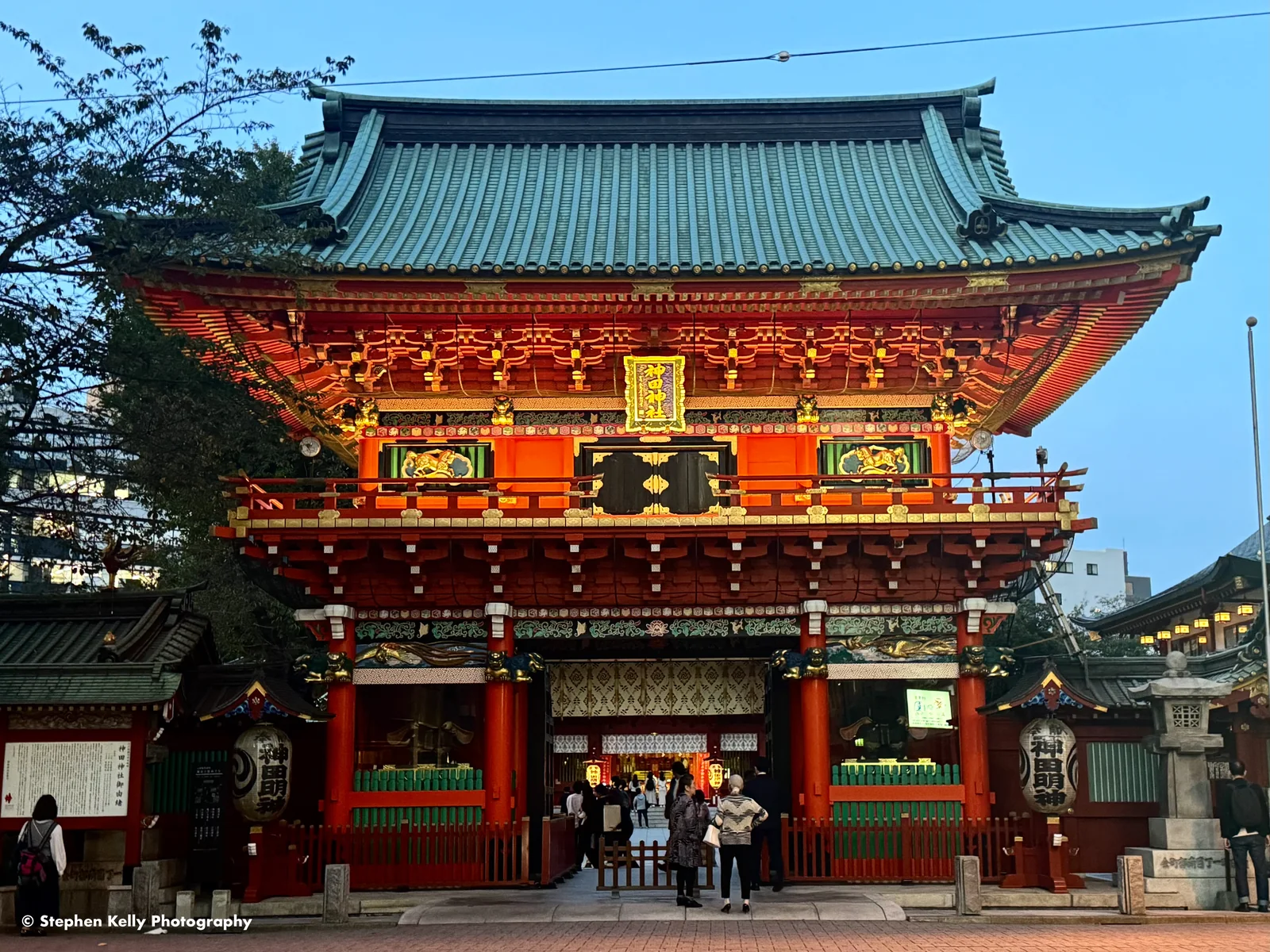
Kanda Myojin IT Charms Explained
Why does a Tokyo shrine offer an IT charm? Explore Kanda Myojin’s history, Japanese workplace rituals, the ¥1,000 offering and how to visit respectfully.
Kanda Myojin offers an IT charm as a prayer for the safe operation of computers. Near Akihabara, this Tokyo shrine connects a familiar religious practice—seeking protection for daily life and work—with the concerns of people who depend on information systems. Its own history records the start of the IT情報安全守護, or IT information-safety charm, in 2001. Shrine history
A useful way to understand it is through the people who receive it. A company outing, a small object carried to work and a wish for fewer incidents can all be part of the same practice. Japanese accounts show earnest hopes alongside workplace humour.
Quick answers
What is the IT charm called? The shrine’s current catalogue lists IT守護 (IT shugo, IT protection), described in Japanese as a prayer for computers to operate safely. You will also encounter the longer name IT情報安全守護 in its history and visitors’ accounts. Official catalogue
How much is it? The listed offering, 初穂料 (hatsuho-ryō), is ¥1,000, as checked on October 25, 2026. The catalogue provides an online juyosho—an office for receiving shrine items. Follow its current item instructions for availability and delivery. Charm listing
Is it a computer-security product? It is an omamori, a protective religious charm expressing a prayer. The shrine’s English catalogue describes its purpose as preventing information leakage. Security updates, backups and careful system operation remain practical work for the people responsible for the devices.
When can I receive one at the shrine? The current notice gives 09:00–18:00 through December 31, 2026 for amulets and shrine tablets. These are counter hours; the notice supplies a different schedule for New Year. Check it again for your visit date. Official hours notice
Why this shrine and this kind of wish fit together
Kanda Myojin’s formal name is Kanda Jinja. The shrine describes itself as the local guardian of 108 neighbourhood associations, covering places including Kanda, Nihonbashi, Akihabara and the Otemachi–Marunouchi business district. Its deities’ associations include relationships, business prosperity and protection from misfortune. Shrine introduction
That local setting helps make sense of an IT charm. For someone whose work depends on computers, a system problem belongs to everyday working life. Asking for safety in that work can sit alongside wishes for a business, a journey or an examination.
The shrine’s chronology also places the charm within a longer engagement with technology: it records internet broadcasting of the Kanda Festival in 2000, followed by the IT charm in 2001. This is the shrine’s own account of its development. Official timeline
The accounts below bring together a shared wish, a familiar object and the practical responsibilities of work.
Japanese accounts from the workplace and everyday life
These are dated accounts by particular visitors and companies. Employer publications also present their workplace culture; they are a small sample of experiences, rather than a survey of Japanese engineers.
A team ritual after a year of work
In a December 29, 2022 E-Seikatsu company account, UX design staff member Fushiki describes a voluntary year-end visit with colleagues. They receive a new IT charm, return the previous one and place the new charm at the office’s small shrine.
The writer anticipates the apparent puzzle: why would people who build digital systems turn to prayer? Their explanation begins with engineers improving their skills and making preparations, then acknowledges that unexpected trouble can still occur. The outing gives colleagues a way to express their hope for another year of safe service together.
That is an account of one team’s practice. It does not establish how frequently other companies visit or whether receiving a charm changes their incident rate.
Humour can accompany the wish
A December 25, 2025 Libero Engineer publicity-team report follows a visit to pray for the company’s progress and a year with fewer system problems. Back at the office, the team puts the charm beside an acrylic stand of the company president.
The report jokes about whether this means a year without incidents is assured. Read in context, that line conveys the team’s mood and their attachment to the object. It supplies a glimpse of workplace humour, not a measured result. The author also presents the shrine visit as a chance to pause and reset attention.
An individual can approach it more quietly
In a December 30, 2025 personal visit diary, onoono7788 describes returning an earlier IT charm and receiving another, with a wish for fewer faults. The writer says they visit when they can, rather than making a visit every year.
The contrast is useful: the same kind of charm can become a group outing, an office display or a personal habit. None of these accounts makes one approach compulsory.
Receiving and keeping a charm respectfully
Kanda Myojin’s own FAQ says that the polite order is to worship first, then receive a charm. Start with the shrine visit itself, give other worshippers space and follow the posted guidance and staff instructions.
For keeping charms, the FAQ advises carrying them with you, for example in a wallet. It also says there is no fixed number you may hold, and that charms from different shrines or temples can be kept together. An individual visitor’s preferred way of displaying or carrying an IT charm is an example, rather than a universal requirement.
The shrine accepts old amulets and tablets for ritual burning, subject to its material restrictions. Ask staff about the particular item before returning it. The FAQ does not set out a compulsory one-year expiry for every charm, so there is no reason to turn the annual company visits described above into a rule for every reader.
Visiting from Akihabara
The shrine is at 2-16-2 Sotokanda, Chiyoda-ku, Tokyo. Its official access page estimates seven minutes on foot from JR Akihabara Station’s Electric Town Exit, or five minutes from JR Ochanomizu Station’s Hijiribashi Exit. These are approximate walking estimates. Official access
Before going, check the current counter-hours notice if receiving a charm is part of your plan. Keep the visit small and unhurried: worship, look at the available items and choose whether one has meaning for you. A listing or an older visitor photograph cannot guarantee the item or design available on a particular day.
For another view of work and making in the area, our 2k540 craft guide follows workshops and small businesses beneath the railway. Together, these places offer different ways to understand the working neighbourhood around Akihabara.
Sources and translations
Shrine information checked October 25, 2026. Current names, offering and hours come from the shrine; dated visitor accounts provide personal and workplace perspectives. The shrine’s own chronology is the source for the 2001 introduction year.
Japanese passages were interpreted with AI assistance and checked separately against the originals for dates, qualifications and context. No independent bilingual review was commissioned. This is a researched explanation; we did not conduct the visits described above. The historical photograph is credited in its caption, with photo reuse details.