
Akihabara · Japan
Nuikatsu Explained: Why Fans Take Plushies Out
What is nuikatsu? Explore Japan’s plush-companion hobby through Japanese fan experiences, creative choices and practical tips for a first outing.
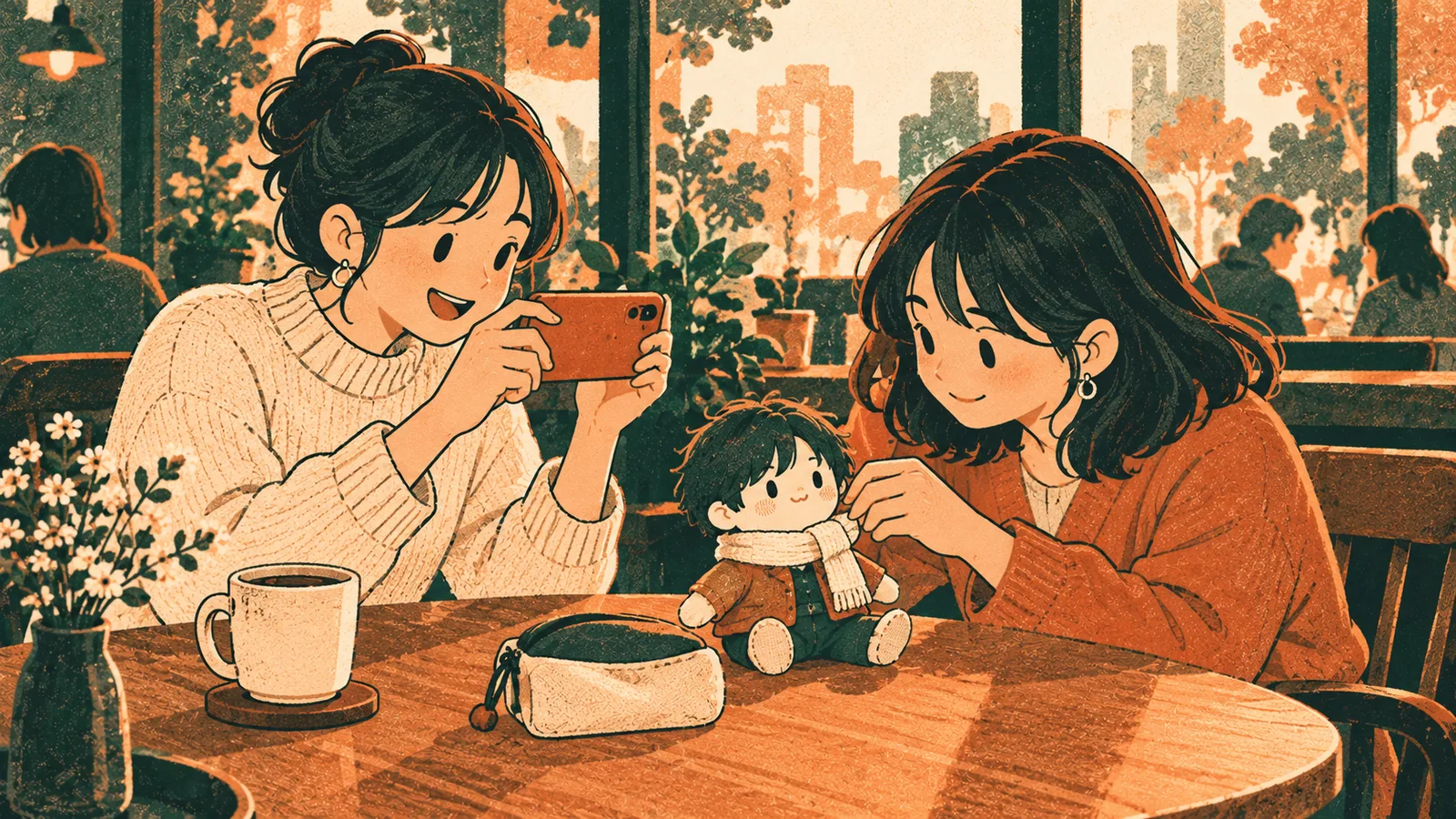
Nuikatsu (ぬい活) means enjoying activities with a favourite stuffed toy: taking it out, photographing it, dressing it or including it in everyday life. In Japanese fan culture, a plush version of a favourite character or performer can become an oshi nui (推しぬい). But the activity also includes beloved toys without that connection. Steiff Japan’s explanation
A plush beside a café drink can look like a simple photograph. Behind it may be a choice of outfit, a remembered trip or the pleasure of having a familiar companion in a new place. There is also a bag to carry, a toy that keeps falling over and the possibility of deciding that you would rather enjoy the outing without taking a photo.
Quick answers
Is nuikatsu the same as oshikatsu? They overlap. Oshikatsu means activities supporting or enjoying your oshi—a favourite character, performer or other person you follow. Nuikatsu puts a stuffed companion at the centre. A favourite animal toy can be part of it too; it need not stand for an idol.
What is nuidori? Nuidori (ぬい撮り), also written “nui-dori,” is photographing plushies. It is one part of nuikatsu, alongside outings, dressing and other ways of spending time with them. Nuigurumi (ぬいぐるみ) means stuffed toy; nui is the shortened form you will encounter in this context.
Do I need special equipment or sewing skills? You can try it with a toy you already own and a phone. Clothes, handmade accessories and dedicated carriers are options, not an entry requirement. Start with what you want to do together before deciding what to buy.
Do I have to post the pictures? No. Keeping a personal photo, dressing a toy at home or simply taking it along are possible ways to enjoy the activity. The public images you see do not have to become your own checklist.
From a collectible to a companion
A collectible can stay in one place and still be meaningful. Taking a plush out changes the possibilities: the same small face appears beside a meal, in front of a landscape or wearing something chosen for the day. The toy can connect a fan’s interest to ordinary routines, rather than appearing only when a new product or performance arrives.
That does not require everyone to imagine their toy in the same way. One person may treat it as a representation of a character; another may be attached to that particular soft object. The useful distinction is what they do with it, rather than how elaborate the resulting photograph looks.
A 2023 exploratory design paper by Yuka Takano and Kayoko Komiya offers one way to think about the creative side. Its preliminary discussion involved two people in their twenties, one practising nuikatsu and one not, with an author facilitating. The researchers considered whether a sense of the toy being alive, and the desire to cherish it, might prompt activities such as making clothes. This is a small starting point for research, not evidence that nuikatsu causes greater creativity or that all fans experience it alike. Japanese Society for the Science of Design paper, full text
The everyday creative choices are easier to see than a grand theory: which scarf to make, where to place the toy, what to leave outside the frame. A familiar object gives those choices a recurring subject.
Two Japanese accounts, two different kinds of enjoyment
A first outing: delight and a little embarrassment
In an August 1, 2024 post, さくら@沖縄で2人暮らし describes trying nuikatsu after seeing other Pokémon fans’ photographs. The preferred portable Espeon plush was unavailable at the time, so the writer took an already-owned Piplup to a café instead.
The discoveries were modest and recognisable: happiness at having a favourite toy in the bag, some embarrassment when other people were around, and the need to choose a bag large enough. The account also distinguishes an easy car outing from the practicalities of carrying the toy while walking. Those old product-availability details describe that visit, not stock today. First-outing account, in Japanese
There is no perfect setup in that story. Enjoyment came from trying an ordinary outing with a toy already at hand.
Trying it and choosing something lighter
あげは, writing on September 5, 2026, reaches a different conclusion after bringing plushies and acrylic character stands on outings. Plushies took up space, often stayed in the bag after the first stop, and photographing them meant repeatedly unpacking, arranging and putting everything away. Editing photographs added more effort.
The writer distinguishes wanting to go out with a representation of a favourite performer from wanting to go and see the performer, preferring the latter and travelling lighter. Yet the post also admits to buying another plush and pouch because they were cute. This is not a rejection of the objects; it is a choice about how to enjoy them. Personal reflection, in Japanese
These are two individual accounts, not a survey of Japanese fans. Together they leave room for both attachment and inconvenience. You can love a plush without wanting to bring it on every trip.
The design behind a tiny photograph
Even getting a toy to stand can be part of the hobby’s practical work. In a June 13, 2025 Sanrio Times feature, product planner 伊藤志乃 describes finding it unexpectedly difficult to keep plushies stable and positioned for photographs. The company connects that experience to its Pitatto Friends design: magnets in the feet attach the toy to a metal base.
The feature also describes a shared body shape within that series, allowing its clothes to fit the different characters. That is a statement about a particular product system, not a promise that outfits fit every plush of a similar height. It is also the maker’s own account, not our independent product test. Sanrio’s development feature
Before choosing an outfit or carrier, check the exact toy model and the maker’s measurements. Think about the shape of the head and body, how the clothing opens and whether the toy can sit securely. A beautiful accessory that makes the whole outing awkward may be better enjoyed at home.
Try one small outing
Our suggestion is to make the first attempt easy to stop, change or repeat:
- Choose one companion. Use a toy you already like, rather than beginning with a shopping list.
- Pack it with the rest of your day in mind. Check that the bag still comfortably holds your ordinary essentials. Use a clean pouch or other suitable protection you already have.
- Choose one uncomplicated stop. A short walk or a place you already planned to visit makes it easier to discover whether carrying the toy adds enjoyment.
- Try a simple frame. Get the camera closer to the toy’s eye level, keep the background uncluttered and see whether it can sit securely. An outfit or prop is optional.
- Decide what was worth the effort. You might want another outing, a smaller companion, a home photograph or no photographs at all.
These are editorial suggestions, not a test of whether you are doing the hobby correctly. The trial is useful precisely because it can tell you what does not suit you.
Café photographs: check the actual venue
A café appearing in someone’s plush photograph does not establish its current rules for your visit. Look for the venue’s own policy, and ask staff when it is unclear. Keep your setup within the permitted area, leave room for food and other customers, and avoid including people who have not agreed to be photographed.
For a concrete Akihabara-area example, Café Triomphe (カフェ・トリオンプ) says in its FAQ that customers may take photographs within their seating area, including with plushies or dolls. It asks that other customers and staff not be included without permission, and links separate rules for video or photography elsewhere in the café. Its regular opening schedule is confirmed about a week ahead because private rentals take priority. Check the current schedule and full conditions before visiting. Venue’s own FAQ
That is one venue’s published policy, not a general permission for Japanese cafés or a guarantee of a table. We have not visited to review its service.
What to keep from the idea
Nuikatsu can turn a familiar fan object into a reason to make something, notice a place or share a small moment. The two writers above also show why the amount of effort matters. A tiny outfit, a bag and a photograph can be enjoyable activities; they can also become jobs you do not want on a day out.
You can choose the part that suits you. For another kind of participation where each person’s comfort and the venue’s rules matter, see our guide to Japanese cheering screenings. For a different way fans turn making into a shared culture, explore doujin music.
Sources and translation notes
Sources checked October 19, 2026. This is an original explanation and practical comparison, drawing on the linked Japanese firsthand posts, the small design study, a manufacturer’s development account and a venue’s own policy. Japanese passages were paraphrased and separately checked for names, negations, dates and qualifications. No source photographs, patterns or full translated articles have been reproduced.
English explanations already exist, including The Oshi Lab’s guide and Japaniche’s terminology page. Our contribution is the comparison of enjoyment, creative decisions and everyday friction. These accounts illustrate different ways to enjoy the hobby; they do not establish its national prevalence or a single origin.