
Akihabara · Japan
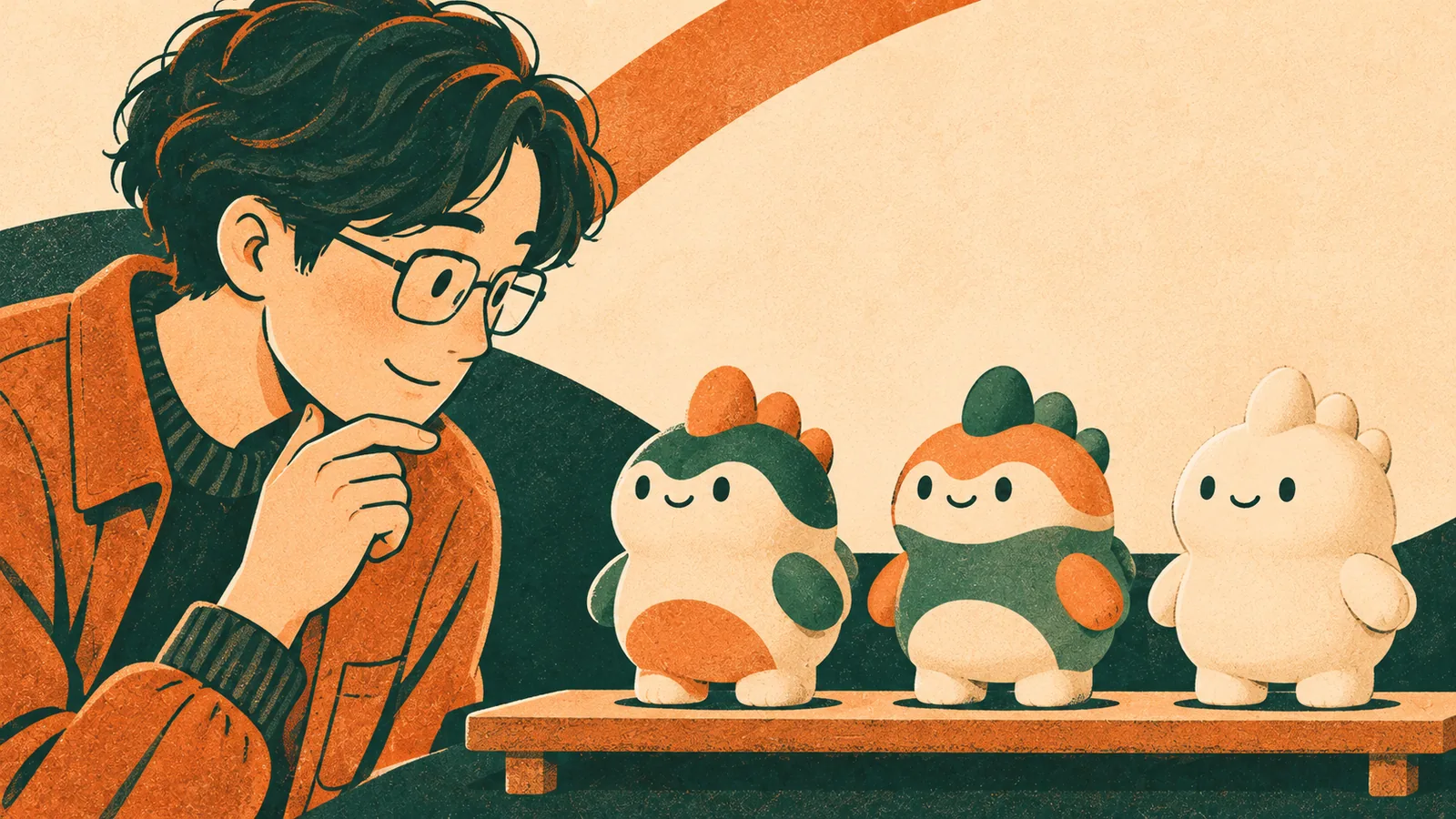
Sofubi Explained Through Shape Colour and Craft
What are Japanese sofubi toys? Understand soft vinyl, moulded colour and painted variations through Japanese makers’ accounts and a practical way to look closely.
Sofubi (ソフビ) means soft vinyl, and is used for figures made from flexible PVC. The word can describe familiar character toys as well as an independent maker’s strange original creature. It identifies a material and toy tradition; it does not tell you the edition size, price or how much work one person performed. Hobonichi’s material definition, Obitsu’s manufacturing services
A useful way into the subject is to compare shape, the colour of the vinyl itself, and paint applied over it. Those choices help explain why two versions of a figure can feel different even when their outline stays the same.
Quick answers
Are sofubi always monsters? No. The examples below include an original storyteller’s creatures and a licensed MOTHER2 character. The material also supports dolls and other products; Obitsu’s work extends beyond collector figures. Manufacturer’s overview
Are they all made by one artist? No. Some creators handle several stages themselves; others design a figure and work with specialists. Both approaches appear in the Japanese accounts below. A maker’s name on the packaging does not, by itself, describe who sculpted, moulded or painted it.
Why release the same shape in different colours? Colour is another design decision. A bright body can bring an outline forward; a contrasting patch can make an eye, limb or textured area more noticeable. Comparing versions lets you see what colour changes while the sculpt remains familiar.
Does sofubi mean an unfinished kit? The term alone does not specify assembly or painting. Read the individual product description for what arrives finished and what work remains. Our garage-kit guide explains the different question of buying a figure you will build or finish yourself.
How a figure takes shape
Obitsu’s production outline begins with a sculpt and wax model, followed by a metal mould. It lists slush moulding or rotational moulding, then colouring, assembly, inspection and packaging. These are different methods of forming the vinyl inside a mould. The company describes this as an example workflow, with the method chosen for the figure’s shape and size. Obitsu’s soft-vinyl process
That sequence separates several kinds of creative work. The sculpt establishes volume and surface: the rounded belly, the lean of a head, the depth of a wrinkle. Moulding turns that design into vinyl parts. Colouring then changes which of those forms your eye notices first.
The final appearance also depends on repeatable craft. In Hobonichi’s September 25, 2024 account of making a Ness figure from MOTHER2, Obitsu staff explain how metal painting masks cover the areas that should remain untouched while paint is sprayed onto the exposed sections. Executive Shizuo Matsui describes how the fit changes as newly moulded vinyl shrinks. For this project, timing the painting mattered as well as choosing the colour. Production account
The account records work involving several companies and specialists. It offers a concrete example of how handwork enters production without suggesting that every sofubi follows an identical schedule.
Japanese makers describe different kinds of attachment
Towa Gangu builds a story into the object
In a September 2025 interview conducted by 真実一郎 for ENKA VINYL, Towa Gangu’s Nishiyama says he originally wanted to make picture books. He has accompanied figures with stories and designed packaging headers that connect into a picture book. A small creature can therefore be one part of a larger imagined world. Japanese interview
His attention to colour begins before painting. Nishiyama describes shaping a wax prototype with later dry-brush painting in mind, and spending time with colour samples to choose the vinyl’s base colour. Dry brushing uses a relatively dry brush to catch raised detail; thinking about that finish can influence the surface he makes.
He recalls becoming a collector as an adult, without childhood memories of playing with sofubi. His account of painting and assembling in his room describes one maker’s working conditions.
SwimmyDesignLab values the vinyl showing through
Taku Yoshimizu of SwimmyDesignLab describes a different starting point in the company’s undated Japanese interview: childhood play with Ultraman and Godzilla toys, followed by a return to collecting as an adult. Company interview
He says the studio uses traditional slush moulding and tries to reduce painted areas so that the colour of the vinyl remains visible. He values the warmth and relatively low-fi appearance that he associates with those choices. His idea of a treasured object leaves room for affection that is difficult to explain through technical perfection alone.
Yoshimizu also describes entrusting most production stages to outside specialists. The pleasure, for him, includes seeing their work exceed the result he had imagined. Set beside Nishiyama’s account, this gives a fuller picture of authorship: personal expression can involve working alone on some stages or relying on another person’s skill.
These are individual makers’ accounts, published by their own company or a commercial collaborator. They offer perspectives on their work, rather than a survey of collectors or proof of what everyone in Japan values.
Looking at one figure before choosing another
Start with the silhouette. Imagine the figure as a single dark shape: can you still recognize its posture or expression? Then look at its surface. Large smooth areas and tiny ridges give paint different things to emphasize.
Next, distinguish the vinyl’s base colour from the paint. When the listing provides that information, compare an exposed area with a painted one. A new version may change either or both. A photograph alone can make the distinction difficult, especially with translucent material or strong lighting.
Finally, ask what keeps your attention. It might be a creature’s story, the way a colour sits over a wrinkle, or the memory of a toy you once owned. Comparing those responses is more useful than assuming another collector’s favourite must become yours.
Before buying, read the specific listing for the version, dimensions, finish, included parts and sale method. Ask for clarification when photographs and descriptions leave those details unclear. The word sofubi cannot answer them all.
Sources and further reading
Sources checked November 10, 2026. This explanation draws on Obitsu’s production workflow and business scope, Hobonichi’s 2024 Ness production record, ENKA VINYL’s 2025 Nishiyama interview and SwimmyDesignLab’s undated company interview, linked beside the relevant passages.
For further English reading, Dan Orlowitz’s Japan Times feature follows production and creators, while DEEPTOKYO’s interview with Medicom Toy president Tatsuhiko Akashi discusses the manufacturer’s role. Substantial English coverage already exists; these offer complementary routes into the subject.
Japanese passages were summarized with AI assistance and checked separately against the original wording; no independent bilingual human review was commissioned. The comparisons above are our suggested ways of looking. We have not visited these workshops or interviewed the makers. Source photographs and complete translated interviews have not been reproduced.