
Akihabara · Japan
Tokyo Game Dungeon 14: What a Demo Can Teach Its Maker
Japanese creators’ lessons from playtesting at Tokyo Game Dungeon: what a short demo can reveal, with edition 14’s October 2026 information now archived.
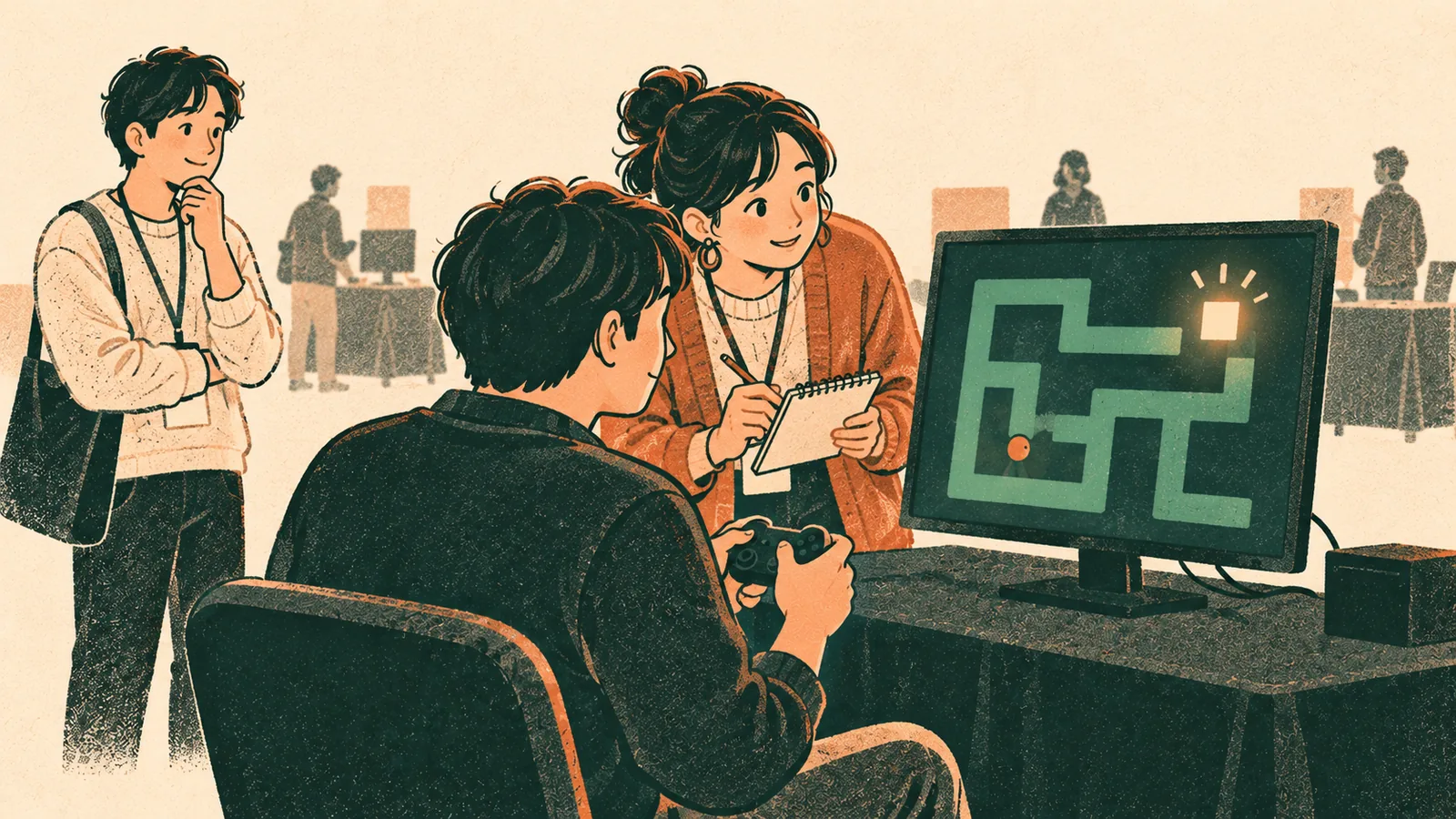
Tokyo Game Dungeon is an exhibition where visitors try games made by individuals and small teams. The scheduled date of its fourteenth Tokyo edition, October 31, 2026, has now passed. For a visitor, a demo offers a glimpse of a game. For its maker, the same few minutes can reveal whether an idea actually makes sense to someone encountering it for the first time.
Japanese developers’ accounts make that exchange concrete: a hidden destination that players could not find, a story shortened without losing its hook, and hardware that behaved differently under exhibition conditions. Those earlier experiences offer a lasting way to think about a game demonstration. This guide now retains that discussion and an archive of the edition’s date and location; its booking guidance has been retired.
Quick answers
Which edition does this guide cover? Edition 14 was scheduled for October 31, 2026, at the Tokyo Metropolitan Industrial Trade Center, Hamamatsucho Building, second and third floors, in Tokyo Portcity Takeshiba. This is historical event information, not an invitation to book or travel to a current edition. Organizer’s dated announcement
What remains useful after the date? The Japanese accounts below explore how players understand an unfinished game, how long a story needs to become interesting, and what happens when a demo meets unfamiliar hardware or people.
Can I play without knowing Japanese? Check the specific demo, not just a finished game’s store-page languages. We have not verified event-wide English interpretation or English support for every booth. A game with little text may be easier to approach, but ask about controls and the available build before sitting down.
A demo is a small encounter with a work in progress
The organizer describes Game Dungeon as an event run by an indie developer, with first-come exhibitor applications and no selection judging of the works. Unfinished games are permitted if they can actually be played. That makes an exhibition build worth approaching on its own terms: it may be a compressed introduction or an experiment, rather than a slice that represents every feature of a finished release. Organizer’s explanation and FAQ
For visitors, the interesting question can be very small. Did you understand where to go? Did one movement feel satisfying? At what point did you become curious about a character? Noticing that moment gives you something more specific to remember—and, if the creator welcomes it, something useful to tell them.
The Japanese accounts below concern earlier editions in 2026. They describe their authors’ experiences, not a report of queues, performance or attendance at edition 14.
What Japanese makers and a player noticed
A destination that was clear to its makers was not clear to players
コバルト of STUDIO DAWN, writing on August 18 about Game Dungeon 13, describes visitors struggling to find a transfer portal in the team’s demo. The portal appeared only when approached; players spent longer wandering than the developers expected. The writer identifies clearer on-screen guidance as something to consider.
The report also describes memory and prolonged-running problems with demonstration hardware. These are the team’s own observations about its build and equipment. The value of the account is its candour: putting a game in front of strangers revealed practical problems that development alone had not resolved.
A story needs enough time to become interesting
Solo creator あまつ3A(あまつさえ) took a different problem to Game Dungeon 11 in February. Their adventure-game demonstrations lasted about fifteen minutes. Having visited an earlier edition as a player, the creator felt a shorter session could end before a story became absorbing.
They edited the opening and added a brief preview of a later hook, while providing two play stations. That was one maker’s solution to balancing narrative and turnover—not a recommended duration for every game. A story demo and an immediately understandable action mechanic can ask for different kinds of attention.
The visitor wants both depth and variety
Player ようみね, in a May 9 account of Game Dungeon 12, reflects on trying fewer games than on a previous visit. Longer sessions seemed part of the reason. The writer recognizes that some games need time to become understandable, while still wanting to play more of them.
Read alongside the creator’s account, that is an illuminating tension. The maker wants an idea to land; the visitor has other tables to explore. Neither preference is unreasonable. These are individual perspectives, not a survey of Japanese players or developers.
How to make a few demos count
The archived edition 14 exhibitor directory records its announced participants. For a future event, use that edition’s own directory to save a small set of priorities, then leave space for a work you did not already know. A useful visit need not become a contest to complete the most demos.
- Ask what the session involves. Check language, controls and approximate length. Follow any booth time limit and staff directions.
- Notice one concrete moment. For example: “I understood the goal when this changed colour,” or “I could move, but I did not know what I was trying to reach.” These are suggested ways to describe your own experience, not quotes from the reports.
- Ask whether feedback is welcome. Let the person hosting the demo decide when to discuss it. Keep the exchange brief when other visitors are waiting.
- Keep the title and official link. An unfinished build can change. Following the creator later lets you see how the idea develops, without treating an exhibition impression as a review of a finished game.
Our DREAMSCAPE guide explores another Tokyo indie event through its art, puzzle and action themes. Game Dungeon offers a different thread for a visit: watching how a creator’s idea meets a new player’s understanding.
Edition 14 archive and future visits
The October 31 date has passed. Advance and on-day ticket guidance, prices and seller-status observations have been retired from this page. For any future edition, consult the organizer for its own date, venue, admission conditions and notices; do not transfer edition 14’s arrangements to another event.
When visiting a game exhibition, ask about photography and feedback before recording or commenting on unfinished work. Follow the current organizer’s and each booth’s rules, and protect other visitors’ privacy.
Sources and checked date
Originally researched October 20, with ticket aftercare October 26. Updated November 1, 2026, after the scheduled date, to retire booking information and preserve the lasting discussion. The organizer’s public page and dated announcement establish the historical schedule; we have not attended edition 14 or independently verified its outcomes.
The three Japanese accounts are linked and attributed above. Their interpretations were translated with AI assistance and checked separately against the originals; that fidelity check is not an independent bilingual review. This article uses original explanation and short paraphrases, rather than reproducing those reports. The illustration is original conceptual artwork.